Animal Names in Spanish Starting with W
Explore our complete list of animal names in Spanish that start with W. This list features unique animals to expand your vocabulary, complete with images and example sentences for practical learning.
The letter W is the thinnest in Spanish — thinner even than K. Spanish inherited almost no words beginning with W, because the letter didn’t exist in Latin at all. Every W-animal in Spanish is a loanword from another language: English, Maori, or a North American indigenous language. This guide covers 4 animals that start with W in Spanish, from el walabí (wallaby) to el wombat (wombat).
Whether you’re a beginner building core vocabulary or a teacher preparing a lesson on animals, this list works as a straight read or as a reference. If you’re looking for a longer list, note that wolverine is glotón in Spanish (G), walrus is morsa (M), and visón (mink) starts with V — three animals English speakers might expect to find here under W but that Spanish places elsewhere. The flashcards and quiz at the bottom test exactly these 4 words.
📋 Quick List: W Animals in Spanish
- Walabí — Wallaby (el)
- Wapití — Wapiti/Elk (el)
- Weta — Weta (la)
- Wombat — Wombat (el)
Walabí – Wallaby in Spanish (el)
El walabí salta entre los arbustos de Australia. (The wallaby hops among the bushes of Australia.)
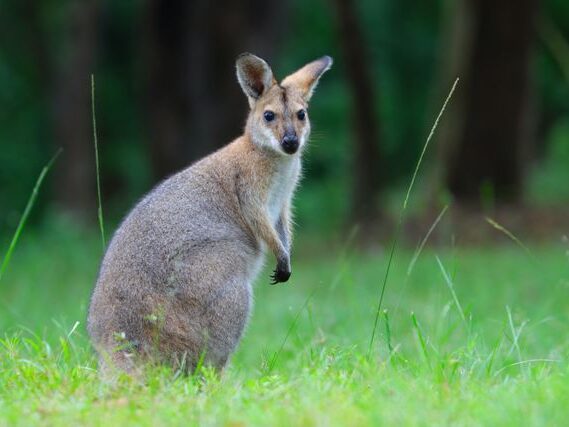
Note: Walabí is masculine and carries an accent on the final syllable: wa-la-BÍ. The word comes from wolabee, a term from the Eora language of Aboriginal Australia, and entered Spanish through English. A wallaby is a small or mid-sized marsupial related to the kangaroo — the main difference is size, not species. In Spanish, canguro (kangaroo) is far more common because kangaroos are more familiar to Spanish speakers.
Wapití – Wapiti/Elk in Spanish (el)
El wapití vive en los bosques de Norteamérica. (The wapiti lives in the forests of North America.)
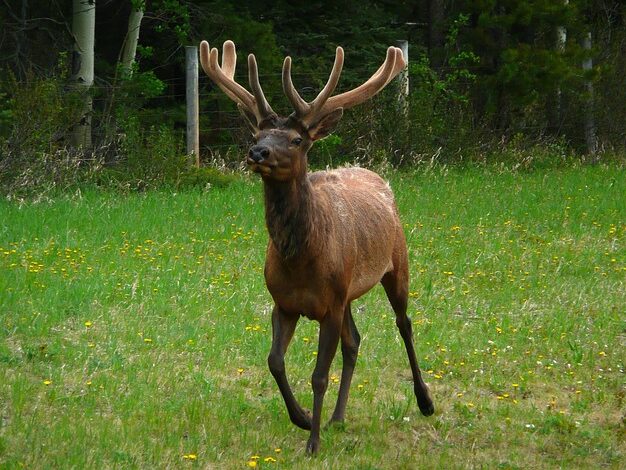
Note: Wapití is masculine and carries an accent on the final syllable: wa-pi-TÍ. The word comes from Shawnee waapiti (white rump) and entered Spanish through English. The wapiti is the same animal North Americans call an elk — a large deer native to North America and eastern Asia. In Spain, uapití is an alternative spelling, and ciervo canadiense is sometimes used to avoid the loanword.
Weta – Weta in Spanish (la)
La weta es un insecto gigante de Nueva Zelanda. (The weta is a giant insect from New Zealand.)
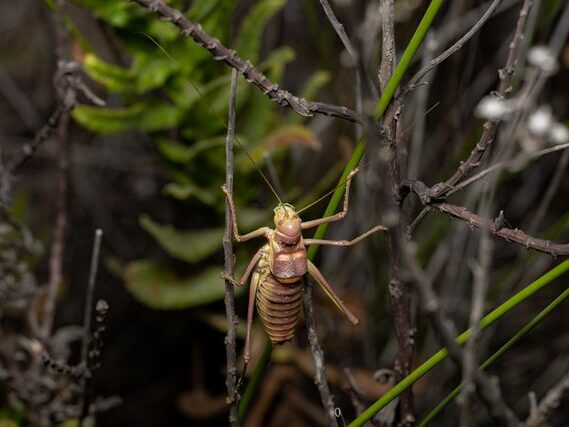
Note: Weta is feminine — the only feminine W-animal on this page — because it ends in -a and follows the standard Spanish pattern for nouns of that shape. The word comes from Maori and refers to a group of large, wingless insects found only in New Zealand. Some species are among the heaviest insects in the world. In Spanish scientific writing, weta keeps its Maori spelling and is invariable in the plural: las weta.
Wombat – Wombat in Spanish (el)
El wombat excava madrigueras. (The wombat digs burrows.)
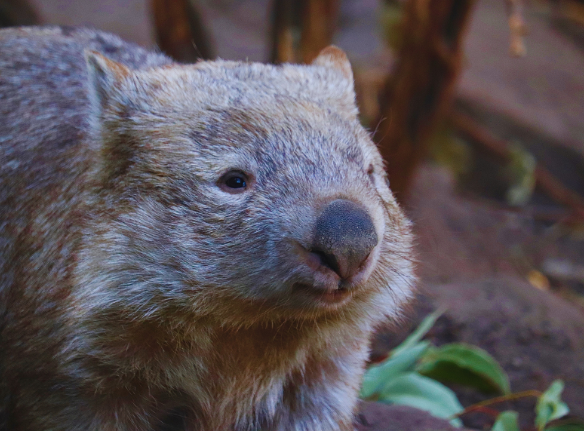
Note: Wombat is masculine. The word comes from wombad, a term from the Dharug language of Aboriginal Australia, and entered Spanish through English. Wombats are stocky marsupials native to Australia, known for their cube-shaped droppings and their powerful burrowing. They are the closest living relatives of the koala. In Spanish, wombat is invariable in the plural: los wombat.
🦘 W Animals in Spanish: Frequently Asked Questions
A: Spanish has very few animals starting with W. The standard four are wombat (wombat), walabí (wallaby), wapití (wapiti/elk), and weta (weta). See the full list of 4 above.
A: Three are masculine and one is feminine. Masculine: el wombat, el walabí, el wapití. Feminine: la weta, because it ends in -a and follows the standard Spanish pattern for nouns of that shape. All W-animals are loanwords, and loanwords normally take masculine gender unless their form suggests otherwise.
A: Wombat (masculine, el wombat). Example: El wombat excava madrigueras. (The wombat digs burrows.) The word is invariable in the plural: los wombat.
A: The letter W did not exist in Latin, so Spanish inherited almost no native words beginning with it. Every W-animal in Spanish is a loanword: wombat and walabí from Aboriginal Australian languages, wapití from Shawnee, and weta from Maori. That’s why this page has 4 entries instead of 10. Note that wolverine is glotón in Spanish (G), walrus is morsa (M), and mink is visón (V) — three animals English speakers might expect to find here.
A: This page covers 4 animals that start with W in Spanish, from el walabí (wallaby) to el wombat (wombat). W is the thinnest letter in the Spanish animal vocabulary, so this list is the shortest on the site.