Animal Names in Spanish Starting With R
Spanish animals that start with R cover a wide range — from the tiny ratón (mouse) hiding in a wall to el rorcual, the whale family that includes the largest animal on Earth. Along the way you’ll find farm and forest animals like la rana (frog) and el ruiseñor (nightingale), plus one bird — el rabilargo — that’s native to the Iberian Peninsula and almost nowhere else in Europe.
This guide covers 10 animals that start with R in Spanish, from la rana (frog) to el rabilargo (azure-winged magpie). Each entry gives you the Spanish word, its English translation, its grammatical gender (el or la), and an example sentence so you can see it used naturally.
📋 Quick List: R Animals in Spanish
- Rana — Frog (la)
- Rata — Rat (la)
- Ratón — Mouse (el)
- Raya — Ray (la)
- Reno — Reindeer (el)
- Rinoceronte — Rhinoceros (el)
- Ruiseñor — Nightingale (el)
- Rémora — Remora (la)
- Rorcual — Rorqual (el)
- Rabilargo — Azure-winged magpie (el)
Rana – Frog in Spanish (la)
La rana salta de hoja en hoja. (The frog jumps from leaf to leaf.)
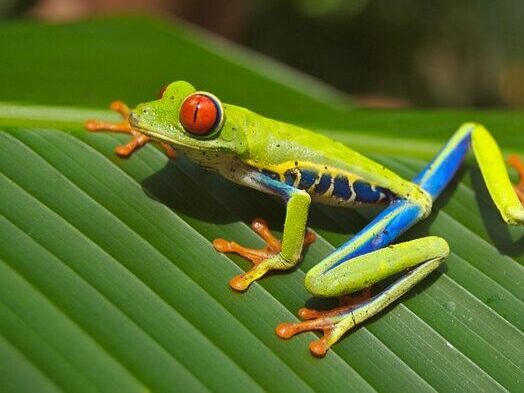
Note: Rana is feminine: la rana, las ranas. A common amphibian found near water. In Spanish, rana refers to frogs; toad is sapo (masculine). The idiom “estar como una rana” (to be like a frog) is used in a few regional expressions.
Rata – Rat in Spanish (la)
La rata corre rápidamente por el callejón. (The rat runs quickly through the alley.)
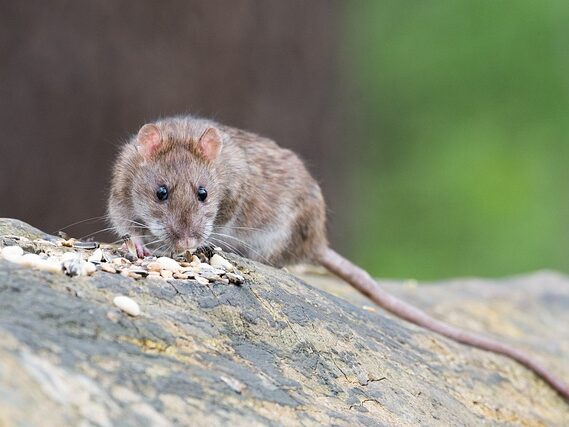
Note: Rata is feminine: la rata, las ratas. A rat — larger than a mouse (ratón). Common in urban vocabulary. The expression “rata de biblioteca” (library rat) means a bookworm — same idea as the English.
Ratón – Mouse in Spanish (el)
El ratón se esconde en el agujero de la pared. (The mouse hides in the wall hole.)
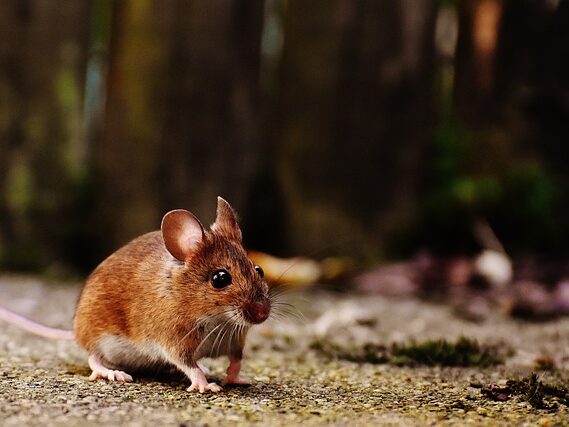
Note: Ratón is masculine: el ratón, los ratones. The plural adds -es and drops the accent. A mouse. Also the word for a computer mouse — same as in English. “Ratón” is the diminutive of rata, but they refer to different animals.
Raya – Ray in Spanish (la)
La raya nada elegantemente en el océano. (The ray swims gracefully in the ocean.)

Note: Raya is feminine: la raya, las rayas. A flat marine fish related to sharks. The same word also means “stripe” or “line” — context determines which. “Mantarraya” (from manta + raya) is the more specific word for manta ray.
Reno – Reindeer in Spanish (el)
El reno tira del trineo de Santa Claus. (The reindeer pulls Santa Claus’s sleigh.)

Note: Reno is masculine: el reno, los renos. A reindeer — also called caribú in some regions. In Spain and Latin America, the word is almost always associated with Christmas. Common in holiday vocabulary and children’s books.
Rinoceronte – Rhinoceros in Spanish (el)
El rinoceronte se alimenta de hierbas en la sabana. (The rhino grazes on herbs in the savanna.)

Note: Rinoceronte is masculine: el rinoceronte, los rinocerontes. A large herbivorous mammal native to Africa and Asia. Often shortened to rino in casual speech. All five species are threatened or endangered.
Ruiseñor – Nightingale in Spanish (el)
El ruiseñor canta melodiosamente en el bosque. (The nightingale sings melodiously in the forest.)

Note: Ruiseñor is masculine: el ruiseñor, los ruiseñores. The plural adds -es and keeps the accent on the ó. A small songbird famous for its beautiful night song — the subject of poems and stories in Spanish literature.
Rémora – Remora in Spanish (la)
La rémora se adhiere al tiburón con su ventosa. (The remora attaches itself to the shark with its sucker.)
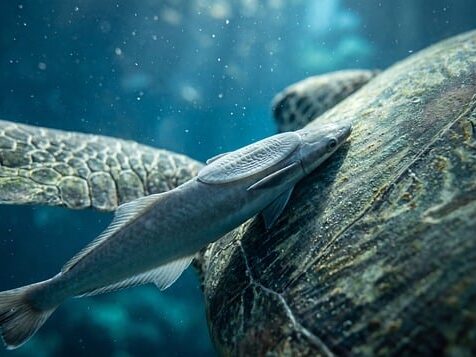
Note: Rémora is feminine: la rémora, las rémoras. A small fish that attaches itself to larger marine animals (sharks, rays, whales) using a suction pad on its head. In Spanish, “ser una rémora” means to be a hindrance or a burden — from the fish’s hitchhiking behavior.
Rorcual – Rorqual in Spanish (el)
El rorcual azul es el animal más grande del planeta. (The blue whale is the largest animal on the planet.)
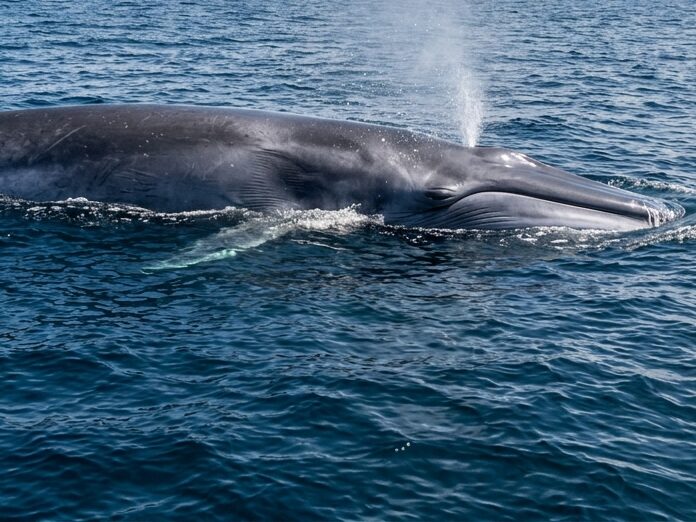
Note: Rorcual is masculine: el rorcual, los rorcuales. The plural adds -es. A family of baleen whales that includes the blue whale (rorcual azul), the fin whale (rorcual común), and the humpback whale (rorcual jorobado). One of the few Spanish animal words that names an entire taxonomic family.
Rabilargo – Azure-winged Magpie in Spanish (el)
El rabilargo vive en los bosques del sur de España. (The azure-winged magpie lives in the forests of southern Spain.)
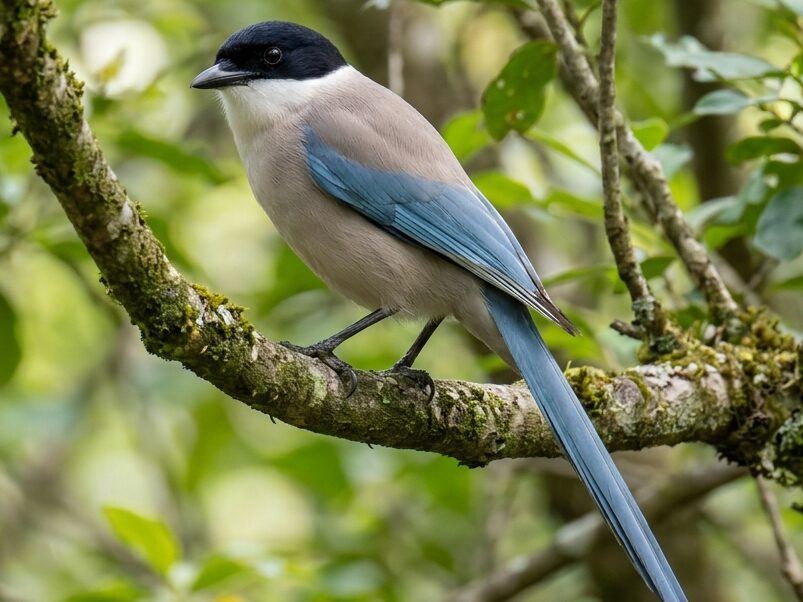
Note: Rabilargo is masculine: el rabilargo, los rabilargos. Literally “long-tailed” (rabo = tail, largo = long). A striking blue-and-brown bird found in Spain and Portugal and, oddly, in a separate population in East Asia. One of the few animals whose Spanish name is more specific than its English one.
🐗 R Animals in Spanish: Frequently Asked Questions
A: The most common animals that start with R in Spanish are la rana (frog), el ratón (mouse), la rata (rat), el rinoceronte (rhinoceros), and el reno (reindeer). See the full list of 10 above.
A: Both. Most R-animals ending in -o are masculine (el ratón, el reno, el ruiseñor), and most ending in -a are feminine (la rana, la rata, la raya). Watch for el rinoceronte and el rorcual — masculine despite the -e and -al endings.
A: Frog is rana (feminine: la rana). La rana salta de hoja en hoja — The frog jumps from leaf to leaf. A toad is sapo — a different word.
A: Rata is a rat — larger, feminine, with a long tail. Ratón is a mouse — smaller, masculine. Despite the shared root (ratón is technically a diminutive of rata), they refer to different animals in everyday use. Ratón is also the word for a computer mouse.
A: This page covers 10 animals that start with R in Spanish, from rana (frog) to rabilargo (azure-winged magpie).