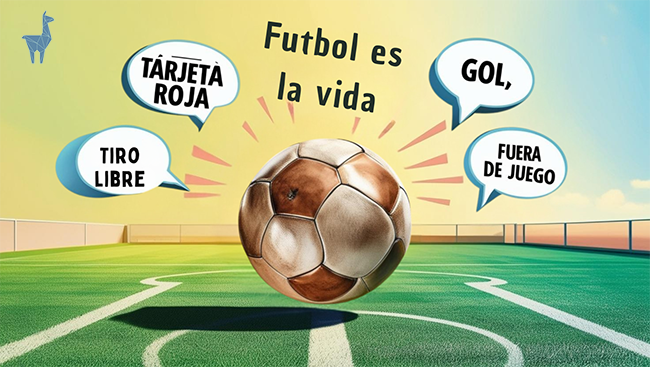
Soccer (or fútbol, as it’s known in Spanish-speaking countries) is more than just a sport—it’s a cultural phenomenon. Whether you’re a player, coach, or just a fan, knowing Spanish soccer vocabulary will help you understand the game better and connect with Spanish-speaking players and fans.
In this guide, we’ll cover essential soccer terms, common expressions, and even regional variations. Let’s kick off!
Basic Soccer Vocabulary in Spanish
Positions (Posiciones)
Portero / Arquero – Goalkeeper
El portero atajó el penal. (The goalkeeper saved the penalty.)
Defensa – Defender
El defensa marcó al delantero. (The defender marked the forward.)
Centrocampista / Mediocampista – Midfielder
El centrocampista dio una asistencia perfecta. (The midfielder gave a perfect assist.)
Delantero – Forward / Striker
El delantero anotó un golazo. (The striker scored an amazing goal.)
Actions (Acciones)
Patear / Chutar – To kick / shoot
Chutó desde fuera del área. (He shot from outside the box.)
Pasar – To pass
Pasó el balón al extremo. (He passed the ball to the winger.)
Driblar / Regatear – To dribble
Messi dribló a tres defensas. (Messi dribbled past three defenders.)
Marcar (un gol) – To score (a goal)
Ha marcado dos goles en el partido. (He has scored two goals in the match.)
Taclear / Entrar fuerte – To tackle
El defensa entró fuerte y le quitó el balón. (The defender tackled hard and took the ball.)
Game Elements (Elementos del Juego)
Balón / Pelota – Ball
Cancha / Campo – Field / Pitch
Arco / Portería – Goal
Fuera de juego – Offside
El árbitro cobró fuera de juego. (The referee called offside.)
Tiro libre – Free kick
Ronaldo va a patear el tiro libre. (Ronaldo is going to take the free kick.)
Penal – Penalty
El árbitro señaló un penal. (The referee awarded a penalty.)
Common Soccer Expressions & Slang
General Expressions
¡Golazo! – An amazing goal!
¡Qué chilena! – What a bicycle kick!
Está en offside – He’s offside.
Juego sucio – Dirty play / Foul play
Tirarse a la piscina – To dive (pretend to be fouled)
El jugador se tiró a la piscina. (The player dove.)
Encouragement & Reactions
¡Vamos! – Let’s go! / Come on!
¡Dale! – Go for it! (Common in Argentina)
¡Mete ese gol! – Score that goal!
¡Qué jugadón! – What a great play!
Insults & Complaints
¡Robo! – Robbery! (Used when fans think the referee is unfair)
¡Árbitro vendido! – Corrupt referee!
¡Era penal! – That was a penalty!
Regional Variations in Soccer Vocabulary
Spanish soccer terms can vary by country. Here are some key differences:
Term
Spain
Mexico
Argentina
Goalkeeper
Portero
Portero / Arquero
Arquero
Field
Campo
Cancha
Cancha
Soccer
Fútbol
Fútbol
Fútbol (but sometimes “fulbo” in slang)
Jersey
Camiseta
Playera
Remera
Soccer shoes
Botas
Tacos
Botines
Example Sentences:
Spain: El portero llevaba una camiseta roja. (The goalkeeper wore a red jersey.)
Mexico: El arquero tiene unos tacos nuevos. (The goalkeeper has new cleats.)
Argentina: El jugador se puso los botines para el partido. (The player put on his soccer shoes for the match.)
Final Tips for Learning Soccer Spanish
Watch games in Spanish – Listen to commentators for real-life usage.
Play FIFA in Spanish – A fun way to pick up vocabulary.
Join soccer forums – Engage with native speakers.
Practice with teammates – If you play, try using Spanish terms during practice.
Now you’re ready to talk soccer like a true hincha (fan)! ⚽
Frequently Asked Questions About Spanish Soccer Vocabulary
⚽ Basic Soccer Vocabulary in Spanish
The most common word for goalkeeper is “portero” (used in Spain and most of Latin America). In Mexico and some Central American countries, “arquero” is also common. In Argentina, “arquero” is the preferred term. Example: “El portero atajó el penal” (The goalkeeper saved the penalty). For more soccer vocabulary, check out our Complete Spanish Soccer Vocabulary Guide.
“Delantero” is the standard term for striker or forward. Example: “El delantero anotó un golazo” (The striker scored an amazing goal). In some regions, you might hear “atacante” or “centrodelantero”. The feminine form is “delantera.”
“Marcar un gol” or simply “anotar”. Example: “Ha marcado dos goles en el partido” (He has scored two goals in the match). For an amazing goal, use “golazo”. Other related phrases: “gol de cabeza” (header), “gol de penal” (penalty goal), “gol en propia puerta” (own goal).
“Fuera de juego” is the official term. However, many Spanish speakers simply say “offside” (pronounced “of-sai”) in casual conversation. Example: “El árbitro cobró fuera de juego” (The referee called offside). In Argentina, you might hear “posición adelantada.”
“Tiro libre” = free kick. “Penal” or “penalti” = penalty. Example: “Ronaldo va a patear el tiro libre” (Ronaldo is going to take the free kick). “El árbitro señaló un penal” (The referee awarded a penalty). In Spain, “penalti” is more common; in Latin America, “penal” is preferred.
🌎 Regional Variations in Soccer Vocabulary
In Spain, “campo” is most common. In Latin America, “cancha” is preferred. Example Spain: “El partido se juega en el campo del Real Madrid” (The match is played at Real Madrid’s field). Example Latin America: “La cancha está en mal estado” (The field is in bad condition). Both are understood everywhere.
This varies significantly: Spain: “camiseta”. Mexico: “playera”. Argentina: “remera”. Colombia, Peru, Venezuela: “camiseta” is also common. Chile: “camiseta” or “polo”. Example Argentina: “El jugador se puso la remera nueva” (The player put on the new jersey).
Spain: “botas” (de fútbol). Mexico: “tacos”. Argentina: “botines”. Other Latin American countries: “zapatos de fútbol” or “chimpunes” (Guatemala, El Salvador). Example Mexico: “El arquero tiene unos tacos nuevos” (The goalkeeper has new cleats).
Most countries use “fútbol”. In Argentina, you’ll hear the slang “fulbo” in casual conversation. In Mexico, it’s “fútbol” but American football is “fútbol americano.” In Spain, “fútbol” is standard. Example Argentina: “Vamos a ver el fulbo” (Let’s go watch soccer).
🗣️ Common Soccer Expressions & Slang in Spanish
“Golazo” means an amazing, spectacular goal. The suffix “-azo” adds emphasis or greatness. Example: “¡Qué golazo marcó Messi!” (What an amazing goal Messi scored!). Other similar soccer exclamations: “jugadón” (great play), “atajazo” (great save by goalkeeper).
“Tirarse a la piscina” literally means “to throw yourself into the pool.” In soccer, it means to dive (pretend to be fouled to win a free kick or penalty). Example: “El jugador se tiró a la piscina y el árbitro le mostró tarjeta amarilla” (The player dived and the referee showed him a yellow card).
When fans think the referee is unfair, they yell “¡Robo!” (Robbery!). “¡Árbitro vendido!” means “corrupt referee!” “¡Era penal!” means “That was a penalty!” (used when a penalty wasn’t given). These are very common in stadiums and bars during matches.
“¡Vamos!” is universal (Let’s go! / Come on!). “¡Dale!” is very common in Argentina and Uruguay (Go for it!). “¡Ánimo!” means “Cheer up!” or “Keep going!” “¡Mete ese gol!” means “Score that goal!” “¡A por ellos!” is used in Spain meaning “Let’s get them!”
“Hincha” means a passionate fan or supporter. In Spain, “aficionado” or “seguidor” is also used, but “hincha” is common in Latin America. Example: “Los hinchas de Boca Juniors son famosos en todo el mundo” (Boca Juniors fans are famous worldwide). The most dedicated fans are called “barras bravas” (ultras).
📊 Talking About Matches & Results in Spanish
“Partido” is the most common word for a soccer match. Example: “El partido comienza a las 8” (The match starts at 8). “Juego” (game) is also understood but less common for professional matches. “Encuentro” is a more formal term. For a friendly match: “partido amistoso”. For a final: “la final”.
“Ganar” = to win. Example: “Real Madrid ganó el partido” (Real Madrid won the match). “Perder” = to lose. Example: “El equipo perdió en casa” (The team lost at home). “Empatar” = to tie/draw. Example: “El partido terminó empatado 1-1” (The match ended in a 1-1 tie). The noun for a tie is “empate”.
“Primer tiempo” = first half. “Segundo tiempo” = second half. Example: “El primer tiempo terminó 0-0” (The first half ended 0-0). “Descanso” = halftime. “Tiempo extra” or “prórroga” = extra time. “Tiempo añadido” or “tiempo de descuento” = injury time / stoppage time.
“Liga” = league. Example: “La Liga española” (Spain’s La Liga). “Copa” = cup. Example: “La Copa del Rey” (King’s Cup – Spain). “Torneo” = tournament. Example: “Torneo de verano” (Summer tournament). “Campeonato” = championship. The most famous Latin American tournament is the “Copa Libertadores”.
🟨 Referees & Rules in Spanish Soccer
“Árbitro” is the standard term for referee. Example: “El árbitro mostró tarjeta amarilla” (The referee showed a yellow card). “Juez” (judge) is also used in some contexts. The linesmen are “jueces de línea” or “asistentes”. The fourth official is “cuarto árbitro”.
“Tarjeta amarilla” = yellow card. “Tarjeta roja” = red card. Example: “El jugador recibió una tarjeta roja por juego sucio” (The player received a red card for dirty play). To say “to show a card”: “mostrar una tarjeta”. To “send off” a player: “expulsar”. Example: “El árbitro expulsó al defensa” (The referee sent off the defender).
“Falta” = foul. Example: “El defensa cometió una falta peligrosa” (The defender committed a dangerous foul). “Falta técnica” = technical foul. “Falta táctica” = tactical foul. “Juego sucio” = dirty play / foul play. “Fuerza excesiva” = excessive force.
📚 How to Learn Spanish Soccer Vocabulary
The best ways: 1) Watch matches with Spanish commentary (ESPN Deportes, TUDN, Movistar+). 2) Play FIFA or eFootball in Spanish language setting. 3) Follow Spanish soccer accounts on social media. 4) Listen to Spanish soccer podcasts like “Radio MARCA” or “El Larguero”. 5) Read soccer news on Marca.com or AS.com. 6) Join Spanish soccer forums or Reddit communities like r/futbol.
Real Madrid: “Los Blancos” (The Whites), “Las Merengues” (The Meringues). FC Barcelona: “Los Blaugranas” (The Blue and Reds), “Barça” or “Culés”. Atlético Madrid: “Los Colchoneros” (The Mattress Makers), “Atleti”. Sevilla FC: “Los Hispalenses”, “Los Nervionenses”. Valencia CF: “Los Che”, “Los Murciélagos” (The Bats). Athletic Bilbao: “Los Leones” (The Lions).
“El Clásico” is the match between Real Madrid and FC Barcelona – the biggest rivalry in Spanish soccer, and one of the biggest in the world. It represents the historic and cultural rivalry between Madrid (the capital) and Catalonia (Barcelona). Other important rivalries include “El Derbi Madrileño” (Real Madrid vs Atlético Madrid) and “El Derbi Sevillano” (Sevilla vs Real Betis).
“La Copa Mundial” or simply “El Mundial”. Example: “España ganó el Mundial en 2010” (Spain won the World Cup in 2010). “La Copa del Mundo” is also common. Related terms: “el campeón del mundo” (world champion), “la fase de grupos” (group stage), “los octavos de final” (round of 16), “los cuartos de final” (quarter-finals), “las semifinales” (semi-finals), “la final” (the final).