Spanish for Traffic Stops: The Complete Field Guide for Police Officers (A2/B1)
◄ Back to Law Enforcement Spanish Hub | Traffic Stop Quiz ►
⏱️ Reading time: 12 minutes | 🧠 Quiz: 10 minutes
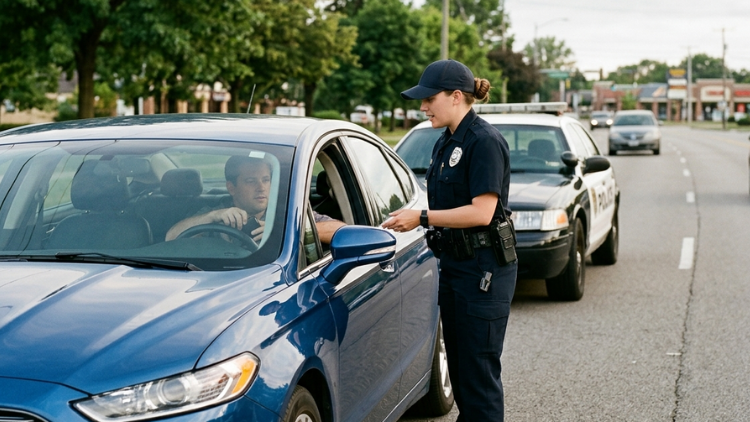
Traffic stops are the most common interaction between law enforcement officers and Spanish-speaking drivers. Knowing the right phrases can de-escalate tension, ensure safety, and improve communication. This guide covers everything from the initial approach to license checks, DUI procedures, and concluding the stop. It is designed for American police officers who need practical, ready-to-use Spanish.
🎯 In this guide, you will learn:
- How to request license, registration, and insurance in Spanish
- Commands for keeping hands visible and stepping out of the vehicle
- How to explain why you stopped the driver
- DUI and field sobriety test instructions
- How to handle difficult or non-compliant drivers
- Common mistakes officers make (and how to avoid them)
- Real conversation scripts for traffic stops
📋 Quick Jump
| Section | |
|---|---|
| Initial Approach & Identification | Explaining the Stop |
| Commands & Safety | License & Registration |
| DUI & Field Sobriety Tests | Handling Difficult Drivers |
| Concluding the Stop | Practice Exercise |
| Common Mistakes | Real Conversations |
| Quiz & FAQs |
Initial Approach & Identification
These are the first phrases you will use when approaching a vehicle.
| Spanish | English | When to Use |
|---|---|---|
| Buenos días / Buenas tardes / Buenas noches | Good morning / afternoon / evening | Always start politely |
| Soy oficial de policía | I am a police officer | Identify yourself |
| ¿Puedo ver su licencia de conducir, por favor? | May I see your driver’s license, please? | Standard request |
| ¿Puedo ver el registro del vehículo? | May I see the vehicle registration? | Standard request |
| ¿Puedo ver su comprobante de seguro? | May I see your proof of insurance? | If required in your state |
| ¿Sabe por qué lo detuve? | Do you know why I stopped you? | Opens conversation |
| Por favor, mantenga las manos al volante | Please keep your hands on the wheel | Safety command |
💡 Grammar Tip: Use usted (formal) with all adult drivers. It shows respect and maintains professionalism. Never use tú with a suspect.
Explaining the Stop
After checking documents, explain why you stopped the driver.
| Spanish | English |
|---|---|
| Le detuve porque… | I stopped you because… |
| …se pasó la señal de alto | …you ran the stop sign |
| …iba demasiado rápido | …you were going too fast |
| …tiene una luz trasera rota | …you have a broken tail light |
| …no usó la direccional | …you didn’t use your turn signal |
| …el registro del vehículo está vencido | …the vehicle registration is expired |
| ¿Tiene alguna explicación? | Do you have any explanation? |
Commands & Safety
Clear, direct commands are essential for officer safety.
| Spanish | English |
|---|---|
| Mantenga las manos donde pueda verlas | Keep your hands where I can see them |
| No se mueva | Don’t move |
| Apague el motor | Turn off the engine |
| Baje la ventanilla | Roll down the window |
| Salga del vehículo | Step out of the vehicle |
| Ponga las manos en el techo | Put your hands on the roof |
| Camine hacia atrás | Walk backward |
| Siéntese en la acera | Sit on the curb |
| No alcance nada | Don’t reach for anything |
| ¿Tiene armas en el vehículo? | Do you have weapons in the vehicle? |
💡 Safety Note: Command tone matters. Say these firmly but not aggressively. No se mueva (don’t move) is clearer than quieto (still).
License & Registration Details
Sometimes you need more information from documents.
| Spanish | English |
|---|---|
| Su licencia está vencida | Your license is expired |
| Este registro no es válido | This registration is not valid |
| ¿El vehículo es suyo? | Is the vehicle yours? |
| ¿De quién es este vehículo? | Whose vehicle is this? |
| Necesito ver la identificación de todos los ocupantes | I need to see identification from all occupants |
| ¿Puede decirme su dirección actual? | Can you tell me your current address? |
| ¿Su licencia es de otro estado? | Is your license from another state? |
DUI & Field Sobriety Tests
When you suspect impairment, use these phrases.
Initial Questions
| Spanish | English |
|---|---|
| ¿Ha estado bebiendo esta noche? | Have you been drinking tonight? |
| ¿Cuánto ha tomado? | How much have you had to drink? |
| ¿Cuándo fue su última copa? | When was your last drink? |
| ¿Está tomando algún medicamento? | Are you taking any medication? |
| ¿Tiene alguna condición médica? | Do you have any medical condition? |
Horizontal Gaze Nystagmus (HGN) Test
| Spanish | English |
|---|---|
| Por favor, siga mi dedo con los ojos solamente | Please follow my finger with your eyes only |
| No mueva la cabeza | Don’t move your head |
| Siga el movimiento | Follow the movement |
| Dígame cuando vea que se mueve | Tell me when you see it move |
Walk and Turn Test
| Spanish | English |
|---|---|
| Póngase en la línea | Stand on the line |
| Ponga un pie delante del otro, talón con punta | Put one foot in front of the other, heel to toe |
| Dé nueve pasos | Take nine steps |
| Gire, y regrese caminando igual | Turn, and walk back the same way |
| Mantenga los brazos a los costados | Keep your arms at your sides |
| Cuente los pasos en voz alta | Count the steps out loud |
One Leg Stand Test
| Spanish | English |
|---|---|
| Párese en un pie | Stand on one foot |
| Levante el otro pie unos quince centímetros | Lift your other foot about six inches |
| Mire su pie | Look at your foot |
| Mantenga la posición hasta que le diga que pare | Hold the position until I tell you to stop |
| Cuente en voz alta: mil uno, mil dos… | Count out loud: one thousand one, one thousand two… |
Breathalyzer
| Spanish | English |
|---|---|
| Sople aquí hasta que le diga que pare | Blow here until I tell you to stop |
| Sople más fuerte | Blow harder |
| Más constante | More steady |
| Necesito una muestra válida | I need a valid sample |
| Si no sopla, será un arresto automático | If you don’t blow, it will be an automatic arrest |
Handling Difficult or Non-Compliant Drivers
Some drivers may refuse commands. Stay calm and use these phrases.
| Spanish | English |
|---|---|
| Necesito su cooperación | I need your cooperation |
| Si no obedece, será arrestado | If you do not obey, you will be arrested |
| Me está dando razones para arrestarlo | You are giving me reasons to arrest you |
| Por su seguridad, por favor, obedezca | For your safety, please obey |
| ¿Entiende lo que le estoy diciendo? | Do you understand what I am telling you? |
| ¿Necesita que hable más despacio? | Do you need me to speak more slowly? |
| Llamaré a un intérprete si es necesario | I will call an interpreter if necessary |
Concluding the Traffic Stop
End the stop professionally, whether with a warning, citation, or arrest.
Warning or Release
| Spanish | English |
|---|---|
| Le voy a dar una advertencia hoy | I am going to give you a warning today |
| Conduzca con más cuidado | Drive more carefully |
| Tenga un buen día | Have a good day |
| Ya puede irse | You can go now |
Citation
| Spanish | English |
|---|---|
| Le voy a poner una multa | I am going to give you a citation |
| Firme aquí | Sign here |
| Su firma no es una admisión de culpa | Your signature is not an admission of guilt |
| Tiene que pagar esta multa antes de… | You must pay this citation by… |
| Si no paga, puede haber una orden de arresto | If you don’t pay, there may be a warrant for your arrest |
Arrest
| Spanish | English |
|---|---|
| Queda arrestado | You are under arrest |
| Ponga las manos detrás de la espalda | Put your hands behind your back |
| No se resista | Don’t resist |
| Le voy a poner las esposas | I am going to handcuff you |
| ¿Tiene alguna condición médica? | Do you have any medical conditions? |
| Le voy a leer sus derechos | I am going to read you your rights |
Practice Exercise: Translate to Spanish
Test yourself. Answers are below.
- “May I see your driver’s license and registration, please?”
- “Keep your hands on the wheel. Don’t move.”
- “Step out of the vehicle. Put your hands on the roof.”
- “I stopped you because you ran the stop sign.”
- “Have you been drinking tonight? How much have you had?”
- “Follow my finger with your eyes only. Don’t move your head.”
- “Take nine steps heel to toe, then turn and walk back.”
- “If you don’t obey, you will be arrested.”
- “You are under arrest. Put your hands behind your back.”
- “Sign here. Your signature is not an admission of guilt.”
Answers
| # | Answer |
|---|---|
| 1 | ¿Puedo ver su licencia de conducir y el registro del vehículo, por favor? |
| 2 | Mantenga las manos al volante. No se mueva. |
| 3 | Salga del vehículo. Ponga las manos en el techo. |
| 4 | Le detuve porque se pasó la señal de alto. |
| 5 | ¿Ha estado bebiendo esta noche? ¿Cuánto ha tomado? |
| 6 | Siga mi dedo con los ojos solamente. No mueva la cabeza. |
| 7 | Dé nueve pasos, talón con punta, luego gire y regrese caminando. |
| 8 | Si no obedece, será arrestado. |
| 9 | Queda arrestado. Ponga las manos detrás de la espalda. |
| 10 | Firme aquí. Su firma no es una admisión de culpa. |
Common Mistakes Officers Make (And How to Avoid Them)
| ❌ Wrong | ✅ Correct | Why |
|---|---|---|
| ¡Alto! (alone) | ¡Deténgase! or ¡Pare el vehículo! | Alto can mean “tall” or “stop” depending on context. Use full phrases. |
| Tienes que… | Tiene que… | Using tú (informal) with a suspect is disrespectful. Always use usted. |
| ¿Dónde está su licencia? | ¿Puedo ver su licencia, por favor? | Direct questions sound aggressive. Soften with ¿Puedo ver…? |
| Bájese del carro | Salga del vehículo | Carro is understood but informal. Vehículo is professional. |
| No te muevas | No se mueva | Again, formal usted command is correct for suspects. |
Real Conversations: Traffic Stop Scripts
Conversation 1: Standard Traffic Stop (Speeding)
Officer: Buenas noches. Soy oficial de policía. ¿Puedo ver su licencia y registro, por favor?
Driver: Sí, oficial. Aquí tiene.
Officer: ¿Sabe por qué lo detuve?
Driver: No, oficial. No sé.
Officer: Le detuve porque iba demasiado rápido. La velocidad límite es 35 millas por hora. Usted iba a 50.
Driver: Lo siento, oficial. No me di cuenta.
Officer: Necesito su cooperación. Por favor, mantenga las manos al volante.
Driver: Sí, oficial.
Officer: Voy a revisar sus documentos. Espérese aquí.
(Officer checks documents)
Officer: Todo está en orden. Le voy a dar una advertencia hoy. Conduzca con más cuidado. Tenga buena noche.
Driver: Gracias, oficial.
Translation:
Officer: Good evening. I am a police officer. May I see your license and registration, please?
Driver: Yes, officer. Here you go.
Officer: Do you know why I stopped you?
Driver: No, officer. I don’t know.
Officer: I stopped you because you were going too fast. The speed limit is 35 miles per hour. You were going 50.
Driver: I’m sorry, officer. I didn’t realize.
Officer: I need your cooperation. Please keep your hands on the wheel.
Driver: Yes, officer.
Officer: I am going to check your documents. Wait here.
Officer: Everything is in order. I am going to give you a warning today. Drive more carefully. Have a good night.
Driver: Thank you, officer.
Conversation 2: DUI Stop
Officer: Buenas noches. ¿Puede bajar la ventanilla, por favor?
Driver: ¿Qué pasó, oficial?
Officer: Le vi manejando de manera errática. ¿Ha estado bebiendo esta noche?
Driver: Solo tomé dos cervezas.
Officer: ¿Cuándo fue su última cerveza?
Driver: Hace como una hora.
Officer: ¿Tiene alguna condición médica?
Driver: No.
Officer: Necesito que salga del vehículo para hacer unas pruebas, por favor.
Driver: Está bien.
Officer: Ponga las manos en el techo. Camine hacia atrás. Siéntese en la acera.
(Officer conducts field sobriety tests)
Officer: No va a poder manejar esta noche. Queda arrestado por manejar bajo la influencia.
Driver: ¿En serio, oficial?
Officer: Ponga las manos detrás de la espalda. No se resista. Le voy a leer sus derechos.
Translation:
Officer: Good evening. Can you roll down your window, please?
Driver: What happened, officer?
Officer: I saw you driving erratically. Have you been drinking tonight?
Driver: I only had two beers.
Officer: When was your last beer?
Driver: About an hour ago.
Officer: Do you have any medical conditions?
Driver: No.
Officer: I need you to step out of the vehicle for some tests, please.
Driver: Okay.
Officer: Put your hands on the roof. Walk backward. Sit on the curb.
Officer: You are not going to be able to drive tonight. You are under arrest for driving under the influence.
Driver: Really, officer?
Officer: Put your hands behind your back. Don’t resist. I am going to read you your rights.
Ready to Test Your Traffic Stop Spanish?
Think you’ve mastered traffic stop vocabulary? Test your skills with our interactive quiz.
🧠 ➡️ Take the Spanish Traffic Stop Quiz
Frequently Asked Questions About Spanish for Traffic Stops
Q1: How do you say “license and registration” in Spanish?
A: Licencia de conducir y registro del vehículo. Note that licencia alone usually means driver’s license. For ID card, say identificación.
Q2: What is the difference between “detener” and “arrestar”?
A: Detener means to stop or detain temporarily. Arrestar means to place under formal arrest. For a traffic stop, use detuve (I stopped). For an arrest, use queda arrestado (you are under arrest).
Q3: How do you say “step out of the car” in Spanish?
A: Salga del vehículo. Never say bájate del carro (informal). The formal command is essential for officer safety and professionalism.
Q4: How do you say “hands where I can see them” in Spanish?
A: Mantenga las manos donde pueda verlas. Or more simply: Manos a la vista (hands in sight).
Q5: What is the Spanish word for “handcuffs”?
A: Esposas. The verb is esposar (to handcuff). Le voy a poner las esposas means “I am going to handcuff you.”
Q6: How do you say “don’t reach for anything” in Spanish?
A: No alcance nada. Or No trate de alcanzar nada (don’t try to reach for anything).
Q7: How do you ask if there are weapons in the car?
A: ¿Tiene armas en el vehículo? For a more direct command: Dígame si tiene armas (tell me if you have weapons).
Q8: What if the driver doesn’t understand you?
A: Say ¿Necesita que hable más despacio? (Do you need me to speak more slowly?) Or ¿Prefiere que llamemos a un intérprete? (Do you prefer we call an interpreter?)
Related Guides from the Law Enforcement Hub
- Spanish Miranda Rights & Arrest Procedures
- Spanish for DUI Stops & Field Sobriety Tests
- Spanish Commands for Law Enforcement
- Spanish for Medical Emergencies (Police Edition)
🚔 Traffic Stop Spanish: Frequently Asked Questions
◄ Back to Law Enforcement Spanish Hub | Traffic Stop Quiz ►


