In Spanish, every noun has a gender—either masculine or feminine. Understanding noun gender in Spanish is essential for proper sentence structure, as adjectives and articles must agree with the noun’s gender. This guide covers the basic rules, common patterns, exceptions, and plenty of examples with English translations to help you master Spanish noun genders.
What Is a Noun?
A noun is a word that names a person, place, thing, or idea. In Spanish, nouns are always classified as masculine (masculino) or feminine (femenino), which affects the articles and adjectives used with them.
Examples of Nouns in Spanish:
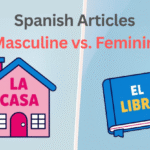
Libro (Book) – Masculine (El)
Casa (House) – Feminine (La)
Perro (Dog) – Masculine (El)
Gata (Cat – female) – Feminine (La)
General Rules for Gender of Nouns in Spanish
1. Masculine Nouns
Most masculine nouns end in:
-o → El libro (The book)
-or → El profesor (The professor)
-aje → El viaje (The trip)
-ambre → El hambre (The hunger – exception, feminine meaning but masculine form)
Examples:
El niño (The boy)
El teléfono (The phone)
El amor (The love)
2. Feminine Nouns
Most feminine nouns end in:
-a → La mesa (The table)
-ción / -sión → La canción (The song), La televisión (The television)
-dad / -tad → La ciudad (The city), La libertad (The freedom)
-umbre → La costumbre (The habit)
Examples:
La chica (The girl)
La flor (The flower)
La lección (The lesson)
3. Common Exceptions to Gender Rules
Some nouns break the usual patterns:
El día (The day) – Ends in -a but masculine
La mano (The hand) – Ends in -o but feminine
El problema (The problem) – Ends in -a but masculine
El agua (The water) – Feminine but uses “el” for pronunciation (but still takes feminine adjectives: agua fría)
Nouns That Change Meaning Based on Gender
Some nouns change meaning depending on gender:
El capital (Money) vs. La capital (Capital city)
El cura (The priest) vs. La cura (The cure)
El frente (The front) vs. La frente (The forehead)
Gender and Number Agreement in Spanish
Nouns must also agree in number (singular/plural) with articles and adjectives. For a deeper dive into this topic, check out our guide on Gender and Number Agreement in Spanish.
Tips for Learning Noun Genders
Memorize nouns with their articles (el/la).
Learn common word endings (-o = masculine, -a = feminine).
Watch out for exceptions (like “el mapa,” “la radio”).
Practice with flashcards to reinforce gender rules.
Conclusion
Mastering the gender of nouns in Spanish is crucial for fluency. While most nouns follow predictable patterns, some exceptions require memorization. Keep practicing with real-life examples, and soon, determining noun gender will become second nature!
Example Sentences Showing Noun Gender in Spanish
Masculine Nouns (with “el”) in Spanish
El libro es interesante. (The book is interesting.)
El perro negro corre en el parque. (The black dog runs in the park.)
El profesor explica la lección. (The professor explains the lesson.)
El teléfono nuevo es caro. (The new phone is expensive.)
El niño pequeño juega con su amigo. (The little boy plays with his friend.)
Feminine Nouns (with “la”) in Spanish
La casa blanca es grande. (The white house is big.)
La mesa está sucia. (The table is dirty.)
La canción es hermosa. (The song is beautiful.)
La ciudad tiene muchos museos. (The city has many museums.)
La chica alta estudia español. (The tall girl studies Spanish.)
Exceptions (Nouns That Defy Gender Rules) in Spanish
El día está soleado.(The day is sunny.) (Ends in -a but masculine)
La mano derecha duele.(The right hand hurts.) (Ends in -o but feminine)
El problema es complicado.(The problem is complicated.) (Ends in -a but masculine)
El agua fría está en la nevera.(The cold water is in the fridge.) (Feminine noun but uses “el” for pronunciation)
Nouns That Change Meaning Based on Gender in Spanish
El capital crece cada año.(The capital [money] grows every year.) vs. La capital de España es Madrid.(The capital [city] of Spain is Madrid.)
El cura habla en la iglesia.(The priest speaks in the church.) vs. La cura para la enfermedad es nueva.(The cure for the illness is new.)
Sentences Showing Plural Agreement in Spanish
Los libros son interesantes.(The books are interesting.) (Masculine plural: “los” + noun/adjective ending in -s)
Las casas blancas son bonitas.(The white houses are pretty.) (Feminine plural: “las” + noun/adjective ending in -as)
Los problemas son graves.(The problems are serious.) (Masculine plural exception: “problema” → “problemas”)
Key Takeaways
Articles must match the noun’s gender and number (el/la, los/las).
Adjectives must agree in gender and number (e.g., alto → alta, altos → altas).
Practice with real sentences to internalize patterns and exceptions.
Gender of Nouns Quizzes
Think you’ve mastered noun genders? Take our Gender of Nouns Quizzes to practice and reinforce your learning!
Gender & Number Agreement Quiz
Quiz:
1. Gender Agreement
2. Number Agreement
3. Articles & Adjectives
Quick Review: In Spanish, nouns are either masculine or feminine. Most -o nouns are masculine, most -a nouns are feminine. Exceptions include “el día” and “la mano”. For plurals, add -s to vowel endings, -es to consonant endings, and change -z to -ces. Adjectives must match the gender and number of the nouns they describe.
Frequently Asked Questions About Gender & Number Agreement in Spanish
Most Spanish nouns ending in -o are masculine (el libro, el perro). Most nouns ending in -a are feminine (la casa, la mesa). Other feminine endings include -ción, -sión, -dad, -tad, -tud, -umbre, and -ez. Other masculine endings include -or, -aje, and -ma (from Greek origin like el problema).
Common exceptions include: el día (day – masculine despite ending in -a), la mano (hand – feminine despite ending in -o), el mapa (map), el problema (problem), el sistema (system), el tema (topic), and el programa (program). Also, la flor (flower) and la piel (skin) are feminine despite ending in consonants.
If a noun ends in a vowel (a, e, i, o, u), add -s: libro → libros, casa → casas. If a noun ends in a consonant, add -es: color → colores, mujer → mujeres. If a noun ends in -z, change the -z to -ces: luz → luces, vez → veces. If a noun ends in -s with an unstressed vowel, it stays the same: el lunes → los lunes.
Yes, adjectives must agree with the noun they describe in both gender and number. For example: chico alto (masculine singular), chica alta (feminine singular), chicos altos (masculine plural), chicas altas (feminine plural). Adjectives ending in -e or a consonant often don’t change for gender but do change for number: inteligente → inteligentes.
Greek-derived words ending in -ma, -pa, and -ta are typically masculine in Spanish. This includes el problema, el sistema, el tema, el poema, el programa, el mapa, el planeta, and el clima. Even though they end in -a, they retain their masculine gender from Greek origin.
Adjectives ending in -e (inteligente, grande, interesante) have the same form for masculine and feminine. They only change for number: inteligente → inteligentes. Adjectives ending in -z (feliz, audaz) change -z to -ces in the plural: feliz → felices, but they don’t change for gender.
The definite articles in Spanish change based on gender and number: el (masculine singular), la (feminine singular), los (masculine plural), las (feminine plural). For example: el libro (the book), la casa (the house), los libros (the books), las casas (the houses).
Yes, most colors change for both gender and number. Examples: rojo (masculine singular), roja (feminine singular), rojos (masculine plural), rojas (feminine plural). However, colors ending in -e or a consonant (verde, azul, gris) only change for number: verde → verdes, azul → azules.
The most common mistakes include: 1) Using “la” with words like problema (correct: el problema), 2) Using “el” with mano (correct: la mano), 3) Forgetting that -ción words are feminine, 4) Not making adjectives agree (la casa bonito instead of bonita), and 5) Forgetting plural rules for words ending in -z (luz → luces).
Nationalities change for both gender and number. For example: español (masculine singular), española (feminine singular), españoles (masculine plural), españolas (feminine plural). Nationalities ending in -e or a consonant (canadiense, alemán) follow regular rules: alemán (masc), alemana (fem), alemanes (masc pl), alemanas (fem pl).
Most adjectives come after nouns in Spanish. However, some adjectives (bueno, malo, grande) often come before nouns. When placed before a masculine singular noun, bueno and malo shorten to buen and mal: un buen libro (a good book), un mal día (a bad day). Grande shortens to gran before any singular noun: un gran hombre (a great man).
Nouns ending in -ista (like artista, turista, periodista) have the same form for both masculine and feminine. The gender is shown by the article: el artista (male artist), la artista (female artist). The same applies to nouns ending in -ante (estudiante) and -ente (presidente).
For compound nouns (two words joined), only the first word usually becomes plural: el abrelatas (can opener) → los abrelatas (no change), el paraguas (umbrella) → los paraguas. However, some compound nouns pluralize both parts: el arcoíris (rainbow) → los arcoíris, la telaraña (spider web) → las telarañas.
Words ending in -ción and -sión are feminine and form the plural by simply adding -es: la canción → las canciones, la televisión → las televisiones, la decisión → las decisiones. The accent mark on the -ión is dropped in the plural form.
The best ways to practice gender and number agreement: 1) Take our Gender & Number Agreement Quiz with 3 separate quizzes (Gender, Number, Articles & Adjectives). 2) Learn nouns with their articles (la casa, not just casa). 3) Practice converting sentences from singular to plural. 4) Create flashcards for common exceptions like el día and la mano. 5) Read Spanish texts and identify agreement patterns. 6) Write descriptions of people and objects using adjectives.